Showing posts with label RnR. Show all posts

Wednesday, March 14, 2018

Book Review [Katharina & Martin Luther: The Radical Marriage of a Runaway Nun & a Renegade Monk by Michelle DeRusha]

Katharina and Martin Luther: The Radical Marriage of a Runaway Nun and a Renegade MonkKatharina and Martin Luther: The Radical Marriage of a Runaway Nun and a Renegade Monk by Michelle DeRusha
My rating: 5 of 5 stars

Katharina was quite the inspiration! Although this book was not what I expected, I thoroughly enjoyed it. I wasn't expecting to learn so much on the difficulties women faced during this time period. I wasn't expecting to learn about Katharina's tremendous work ethic! I wasn't expecting to fall in love with the Luther household. And I truly wasn't expecting conviction upon reading of Katharina's work ethic. But these aren't the only unexpected, wonderful results of reading this book, which I encourage you to do as well! You will be thankful for it, I can promise you that.

I cannot even begin to sing my gratitude for living in the 21st century. The view of women in general has changed significantly. We have citizenship rights, for example, and if our spouse passes away (or if we choose not to marry at all) we will not be condemned or feared to be a witch with extreme sexual passions that cannot be tamed. Documents like Malleus Maleficarum (known as the Hammer of Witches) is now considered ludicrous for statements such as, 
"a woman was a liar by nature; vain in gait, posture, and habit; and insatiable in carnal lust, as well as wicked: "a foe to friendship, an unescapable punishment, a necessary evil, a natural temptation, a desirable calamity, a domestic danger, a delectable detriment, an evil of nature, painted with fair colors! A woman either loves or hates there is no third grade. When a woman thinks alone, she thinks evil. All [witchcraft] comes from carnal lust, which is in women insatiable." (p. 171) 
When I read those lines my jaw dropped to the ground. I was more than shocked and appalled for these women! My sympathy for their extreme adversity ran so deeply that my head was overwhelmed by my shaking it. With that, I thanked God for our equality in Christ. That before Him I am no better than a king, the president, a man, or any human in history - no matter the race, nationality, or physical disposition - like everyone I am a sinner in need of a Savior. And because of my faith in Jesus Christ's death, burial and resurrection I am like any other believer - whether king, president, man, or human - no matter the race, nationality, or physical disposition - I am righteous and holy because of the work of Christ in my life. Hallelujah!

I am also incredibly thankful modern appliances that only require me to walk up and down the stairs and not to the river to wash my clothing - even in the dead of winter! Or the ability to vacuum my rug rather than beat the dirt out. Or my dishwasher, crockpot, &etc. that have essentially made me lazier than the women during 1500's. Katharina woke at 4am and hit the floor running. Her 17 hour work day included being a brewmaster, house manager of the many guests who lived in their home, wife, and mother. She raised her own livestock, slaughtered them, and prepared them for meals. She tended her own garden and bees. She was also a nurse whose son, Paul (a doctor), commended her for her knowledge of the medical profession. In fact, when the Black Plague hit their town, she tended to the sick in the cloister where they lived. Still, that isn't the part that struck me - she tended to the sick and gave birth to a child right in the middle of it!

This woman!

Another fact that struck me was that Martin tried to pay her for reading the Bible through in a year. She refused, but he wrote of her that she knew the Psalm's by heart better than anyone he knew (including himself). Amazing.

Katharina is a woman I cannot wait to meet. Although this was a book about her revolutionary marriage (she was a nun and her husband a monk) and despite my joy in reading about their marriage and how they faced adversity together or reared their children (which was one of my favorite parts because of statements like, 


"Luther understood parenting as nothing less than a holy calling. "The greatest good in married life, that which makes all suffering and labor worthwhile, is that God grants offspring and commands that they be brought up to worship and serve Him, he wrote in 1522, before he was married or had children of his own. "In all the world this is the noblest and most precious work, because to God there can be nothing dearer than the salvation of souls." ... [Luther] considered there no greater or nobler authority on earth than that of parents over their children. Yet the comments and stories sprinkled throughout Table Talk, the ender letters Luther penned to his wife, and the portraits depicting Luther and his family also reveal something obvious yet not often mentioned: Luther and Katharina had fun with their kids and enjoyed spending time with them. They delighted in their children's antics and their innocent comments and expressions. Love and joy were obviously abundant in the Luther household." p.233-234) 
My favorite pieces to learn were that of Katharina and how Martin - despite what the world at that time said about women - had a deep and abiding love, trust, and respect for his wife. Even after he passed away, his trust for her was immense when you read his will which was revolutionary for that time. What he gave her and entrusted her with was unheard of which caused a lot of heartache for Katharina. Still, when her husband died she proved her resourcefulness, her intelligence, and her innovation. I am still amazed and inspired by her and how she came alongside her husband - a man who changed history by standing up for truth!

View all my reviews

Because I can't help myself (seriously, it's that good!) I had to share one of my favorite quotes, 
"[Martin Luther's] understanding of grace-based faith versus works-based faith was more than a personal revelation; it informed his entire rebellion against the church. After all, if human beings couldn't possibly earn salvation by their good works, if human beings had no righteousness of their own and were entirely dependent on Christ for their salvation and hope, where, then, did that leave good works like pilgrimages and fasting? Where did that leave the notion of purgatory? Where did that leave the monastic vows of poverty, obedience, and chastity? Where did that leave the pope, with his sales of indulgences, and the priests, doling out penance in the confessionals? Luther came to believe that the church to which he had dedicated his life was built on sand, and each abuse, each indulgence, added an unsustainable weight to the structure. In his eyes, Romans 1:17 obliterated the very foundation of the Roman Catholic Church." p.91-92

Wednesday, April 15, 2015

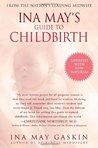
"Ina May's Guide to Childbirth" by Ina May Gaskin [Book Review]

Ina May's Guide to ChildbirthIna May's Guide to Childbirth by Ina May Gaskin
My rating: 5 of 5 stars

There's so much about this book that I love and I debated a long time between a 4 and 5 star rating. Ina May offers information galore that every expectant mother should read (whether or not it's your first or tenth child). However, there were some interesting birth stories in the beginning that you must prepare yourself to read. They caught me off guard. (Remember this is coming from a conservative Christian perspective.) I gave it 5 stars because she offers wisdom not just from personal experience (where she's attended nearly 3,000 deliveries from beginning to end) but also because of her research, her passion for the midwifery profession and all mothers-to-be, her findings upheld by medical professionals around the world, but also because she possesses a wealth of knowledge that every woman needs to know. Not to mention that her success rate in delivering babies med-free and intervention free are outstanding.

You cannot ignore these facts as you read her book.

Due to Ina May's knowledge of the woman's body, her personal experiences, her education, and her renowned reputation throughout the world I was inclined to listen to what she had to say. She backed up her personal experiences with references galore, which also boosted my confidence in the knowledge Ina May shared. Her chapters on the mind and body connection, what happens in labor, the sphincter law, giving birth: move freely, let gravity work for you (where she details specific techniques for pain relief), and her knowledge of VBAC's helped relieve me of anxiety and fears as a result of my first labor and delivery experience. Due to the fact that she shared her knowledge I feel ready, able, and EXCITED to experience the delivery of our second child.

"Women can hardly make truly informed decisions when some of the most relevant information is not available to them." (p. 288) I feel educated, which is something I desperately wanted the first time around and thought I was receiving. Hindsight, my ignorance played a huge part in my daughter coming into this world in a room that was full of stress and high intensity. Thankfully, I finished this book with an incredible sense of relief because of the knowledge Ina May shared. I am not a "lemon" as I truly believed after my first experience. I now know HOW God equipped my body to give birth and I simply need to trust in how He designed women to bring forth life. That is an amazing comfort brought forth by Ina May's desire to inform women. Thank you Ina May!

View all my reviews


I look forward to sharing a few of my favorite quotes! Stay tuned...

Monday, February 16, 2015

The 4 Pages in "Ina May's Guide to Childbirth" That Left Me Frustrated

A dear friend gave me three books to read that helped her as she prepared for the birth of their second daughter over two years ago. Now that I'm the same boat I was anxious to feel better equipped for this birth than I was with Beans, so I was thankful to receive them. I dived in to "Ina May's Guide to Childbirth" right away. 
Her credentials are pretty impressive (check out her website for more information on this renowned midwife). She has many published books, has attended more than 1200 births from beginning to end, she lectures to other midwives and has even been invited to speak at medical schools, and most impressive yet is that a method devised to deal with a feared childbirth complication was named after her and is now taught to medical professionals around the world. (source) There are so many reasons to trust what she has to say about childbirth.  

And it took only four pages in her book to frustrate me and leave me feeling elated all at once. I am not "broken" despite what the doctors made me believe.

The chapter titled, "The Wrong Environment Can Stall or Reverse Labor" (more precisely pages 138-141) gave reason to my feelings precisely. It's hard to condense Ina May's words and I'd honestly like to give you what she stated in its entirety, but I'll try to sum it up instead... 

Before I do, I'll give you my favorite quote from the section which will help you understand my summation:
The problem is that doctors today often assume that something mysterious and unidentified has gone wrong with labor or that the woman's body is somehow "inadequate" - what I call the "woman's body as a lemon" assumption. For a variety of reasons, a lot of women have also come to believe that nature made a serious mistake with their bodies. This belief has become so strong in many that they give in to pharmaceutical or surgical treatments when patience and recognition of the normality and harmlessness of the situation would make for better health for them and their babies and less surgery and technological intervention in birth. Most women need encouragement and companionship more than they need drugs. 
Remember this, for it is as true as true gets: Your body is not a lemon. You are not a machine. The Creator is not a careless mechanic. Human female bodies have the same potential to give birth as well as aardvarks, lions, rhinoceri, elephants, moose, and water buffalo.” (p. 141-142)
She began this section with one simple fact: that birth requires a "maximum degree of relaxation". Ina May and her midwife partners witnessed on many different occasions (and gave specific stories of such instances) where as soon as relaxation was lost, labor stopped or reversed. She dived into medical textbooks and interviewed other medical professionals to determine what was said about this phenomena and what she found shocked me. Doctors from the 1800's -1900's wrote about it in their medical textbooks, but recent textbooks deny its existence. Most doctor's today do not believe that the cervix was truly open to the stated centimeters, in other words, they do not trust in the midwife's ability to check openings appropriately and choose to believe that something "mysterious and unidentified has gone wrong with labor" or that the woman's body is now somehow "inadequate" instead. Ina May quoted six different doctors from the 19th century who witnessed this phenomena first hand and wrote about it in medical textbooks with advice on what to do and why. 

Here's the underlying piece to this puzzle and why it fit my feelings precisely: most doctors during this time period knew that an unwelcome or upsetting presence could stall labor. AND THAT IS EXACTLY WHAT HAPPENED TO ME. There's a few things you need to understand about my doctor and anesthesiologist with Brielle's birth: my doctor wanted me to have an epidural in the worst way and was not on par with my wanting a no-med/intervention free birth and she made that quite clear with her mini temper tantrums as she stomped out of the room stating (not facing me), "You're not any less of a mother if you have an epidural." I know that. I believe that. But it was not my choice, for many reasons. Secondly, I had a few playlists that helped me focus on something other than contractions and the moment my anesthesiologist entered the room (after giving in to my doctor's wishes) he growled, "Turn that crap off." It was not at all the environment I had envisioned or the encouragement I had hoped to receive from the medical community. (They were pieces I left out of Brielle's Birth Story because despite the callousness of the doctors that attended her birth, it was an unforgettable experience that changed my life forever. It was in her story and the happenings afterwards that forced me to have an eternal perspective on life and understand God's sovereignty, so I am truly thankful for it.) What leaves me irked is the lack of humility from the doctors I've encountered.  

Reading her findings made me irritated, writing that paragraph has made me angry. Doctors, do you understand the power you have to heal, discourage, encourage, manipulate and truly hinder or help your patients?

It's truly unfortunate that American women share more horrific stories of childbirth than beautiful positive ones. I desperately want a positive med-free, intervention-free experience and I really, really want encouragement and support for that decision. Sadly we spend more time comparing and judging one another than offering what Ina May has found to be most successful: encouragement and companionship.

Which is why I love sharing birth stories occasionally here, there's no better way to encourage one another. If you are interested in sharing yours, leave a comment and I'd love to get in contact with you!

Friday, January 9, 2015

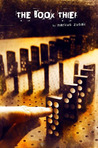
"The Book Thief" by Markus Zusak [Quotable Quotes]

This book wormed its way into my heart, it took a bit, but the author's writing was so beautiful that I knew I would regret putting it down. I am so thankful I pushed through the first few chapters because it made my top ten list. 

Mark Zusak's style of descriptive writing was so uniquely beautiful that I had quotes galore, just because of the picture he painted with his words. Starting with a Jewish section of town that broke my heart...

Markus Zusak

“It was a place nobody wanted to stay and look at, but almost everyone did. Shaped like a long, broken arm, the road contained several houses with lacerated windows and bruised walls. The Star of David was painted on their doors. Those houses were almost like lepers. At the very least, they were infected sores on the injured German terrain." (p. 51)

His comparisons to a broken arm, lepers, infected sores gave such tremendous insight into how the Jews were seen and treated in Germany during WWII. My little blurb on this particular quote gives it zero justice, but I can't seem to put the significance of this statement -considering the Jewish laws dealing with lepers and infected sores- so I doubt I'll be able to give due credit for any of the other quotes either...

“For now, Rudy and Liesel made their way onto Himmel Street in the rain. He was the crazy one who had painted himself black and defeated the world. She was the book thief without the words. Trust me, though, the words were on their way, and when they arrived, Liesel would hold them in her hands like the clouds, and she would wring them out like the rain.” (p. 80)


And when you read her words you'll need to wring out a box of tissues. The next quotes were simply wonderful, with no description needed of me...


“...one opportunity leads directly to another, just as risk leads to more risk, life to more life, and death to more death.” (p. 83)


"[Mama's] voice was surprisingly calm and caring. As you can imagine, this worried the girl a great deal. She'd have preferred to hear them arguing. Whispering adults hardly inspired confidence." (p. 95)


Okay. Did anyone else literally laugh out loud after reading the first few sentences of the next quote? Please tell me I'm not alone...


“Many jocular comments followed, as did another onslaught of "heil Hitlering." You know, it actually makes me wonder if anyone ever lost an eye or injured a hand or wrist with all of that. You'd only need to be facing the wrong way at the wrong time or stand marginally too close to another person. Perhaps people did get injured. Personally, I can only tell you that no one died from it, or at least, not physically. There was, of course, the matter of forty million people I picked up by the time the whole thing was finished, but that's getting all metaphoric.” (p. 111-112)

I can imagine someone losing an eye from an enthusiastic "heel Hitler" but his last two sentences of that quote stopped my laughing instantly. 

The next quote was taken from a book burning that I thought were beautiful...

“The orange flames waved at the crowd as paper and print dissolved inside them. Burning words were torn from their sentences. ” (p. 112)

How true (but I don't think it applies to eleven-year-olds alone): “Eleven-year-old paranoia was powerful. Eleven-year-old relief was euphoric.” (p. 132)

This description of Max, a Jew, hiding in the basement, fearing every noise, every movement was moving... “Everything was so desperately noisy in the dark when he was alone. Each time he moved, there was the sound of a crease. He felt like a man in a paper suit.” (p. 140)

Liesel and her best friend Rudy did their fair share of name calling. "Saumensch" means girl pig and "Saukerl" is male pig. This particular quote made me giggle (lots): “He was waving. "Saukerl," she laughed, and as she held up her hand, she knew completely that he was simultaneously calling her a Saumensch. I think that's as close to love as eleven-year-olds can get.” (p.144)

Remember that as you read this quote, the narrator of this book is death: “They say that war is death's best friend, but I must offer you a different point of view on that one. To me, war is like the new boss who expects the impossible. He stands over your shoulder repeating one thin, incessantly: 'Get it done, get it done.' So you work harder. You get the job done. The boss, however, does not thank you. He asks for more.” (p. 309)

I took the next quote out of Max's book describing Hitler:
“The young man wandered around for quite some time, thinking, planning, and figuring out exactly how to make the world his. Then one day, out of nowhere, it struck him - the perfect plan. He'd seen a mother walking with her child. At one point, she admonished the small boy, until finally, he began to cry. Within a few minutes, she spoke softly to him, after which he was soothed and even smiled. 

The young man rushed to the woman and embraced her. "Words!" He grinned.

"What?"

But there was no reply. He was already gone.

Yes, the Fuhrer decided that he would rule the world with words.” (The Word Shaker, p. 445)

Mark Zusah hit the nail on the head with that one. Hitler used words to turn a nation against a group of people. He used words to intimidate, to hurt, to kill, to ruin... Imagine if we all viewed words with such intensity? But with the opposite intention. To love, to respect, to honor, to cherish, to nourish...

Aaaaaaand let's do a 180 with a quote from death that'll make ya laugh...

“For some reason, dying men always ask questions they know the answer to. Perhaps it's so they can die being right.” (p.469)

... and another that'll make you cry...

“For a long time, she sat and saw.

She had seen her brother die with one eye open, on still in a dream. She had said goodbye to her mother and imagined her lonely wait for a train back home to oblivion. A woman of wire had laid herself down, her scream traveling the street, till it fell sideways like a rolling coin starved of momentum. A young man was hung by a rope made of Stalingrad snow. She had watched a bomber pilot die in a metal case. She had seen a Jewish man who had twice given her the most beautiful pages of her life marched to a concentration camp. And at the center of all of it, she saw the Fuhrer shouting his words and passing them around.

Those images were the world, and it stewed in her as she sat with the lovely books and their manicured titles. It brewed in her as she eyed the pages full to the brims of their bellies with paragraphs and words.” (p. 520-521)

I loved that quote because it was the perfect summation of Liesel's life. The next quote was taken from a section of the story where her reaction to pain and heartache left me in a state of reflection...

"She tore a page from the book and ripped it in half. 

Then a chapter.

Soon, there was nothing but scraps of words littered between her legs and all around her. The words. Why did they have to exist? Without them, there wouldn't be any of this. Without words, the Fuhrer was nothing. There would be no limping prisoners, no need for consolation or worldly tricks to make us feel better. 

What good were the words?" (p. 521)


In my own experience, words have been the most effective tool to change my life. I have hated words and I have loved words. Perhaps it was that reoccurring theme that helped me form a love towards the words in this book and events such as this, when Ilsa gave Liesel an empty journal to fill with her very own words...

“As it turned out, Ilsa Hermann not only gave Liesel Meminger a book that day. She also gave her a reason to spend time in the basement, her favorite place, first with Papa, then Max. She gave her a reason to write her own words, to see that words had also brought her to life.
"Don't punish yourself", she heard her say again, but there would be punishment and pain, and there would be happiness, too. That was writing.” (p.524-525)

What a beautiful comparison and an extremely sad part of the book described here... “Papa sat with me tonight. He brought the accordion down and sat close to where Max used to sit. I often look at his fingers and face when he plays. the accordion breathes. There are lines on his cheeks. They look drawn on, and for some reason, when I see them, I want to cry. It is not for any sadness or pride. I just like the way they move and change. Sometimes I think my papa is an accordion. When he looks at me and smiles and breathes, I hear the notes.” (p.527)

I loved the narrator, even though the narrator was death. Markus brought death to life with words such as this: “I wanted to tell the book thief many things, about beauty and brutality. But what could I tell her about those things that she didn't already know? I wanted to explain that I am constantly overestimating and underestimating the human race - that rarely do I ever simply estimate it. I wanted to ask her how the same thing could be so ugly and so glorious, and its words and stories so damning and brilliant.


None of those things, however, came out of my mouth.

All I was able to do was turn to Liesel Meminger and tell her the only truth I truly know. I said it to the book thief and I say it now to you.

I am haunted by humans.” (p. 550)


Be sure to check out my review.

Monday, January 5, 2015

"The Book Thief" by Markus Zusak [Book Review]

The Book ThiefThe Book Thief by Markus Zusak
My rating: 5 of 5 stars

It took many pages to get "into" this book. Markus Zusak's style of writing, however, kept me intrigued. His writing is genius and after recognizing this from the first few pages, where I realized the narrator was death, I didn't want to put it down. I will be forever grateful I kept reading because those first few chapters I struggled to read and understand were all made clear the farther along I read. So much so that when I finished the last few chapters, I went back and reread the beginning. I highly recommend you do the same, especially the chapter titled, "The Flag". I have no doubt that if you take this book on with the same reverence as I did to the author's brilliance, you will, like myself, grow to love the book and the characters in it. I liked it so much, in fact, that it took days to write this review. I simply had no words.

How could I give words to the book thief's grief (the book thief = Liesel)? I can't even begin to tell you how much I actually liked her cantankerous "mama" or how much I loved her "papa" or enjoyed seeing the relationship unfold with Frau Holtzapfel or the mayors wife. How could I describe the impact Max's Standover Man or his story of The Word Shaker had on me? How could I even talk about Max without tears? In fact, how could I talk about any one of Liesel's loved ones without tears? Especially Rudy. No, especially papa. Zusak brilliantly gives life to German citizens living their life in the heart of Nazi Germany. Such life, that I don't have the words to describe how much I liked this heartbreaking book. Before this book I felt disdain for German citizens who simply stood by and watched the Holocaust, but now, thanks to Zusak, I don't have words because I know, that despite this book being fictional, it isn't far from the truth.

Thank you Markus Zusak.

It made my top ten list and I'm 110% sure that no amount of "reviewing" on this book could fully detail the impact Markus Zusak's words, descriptions and stories had on my heart. I found it inspiring. I found it unforgettable.

View all my reviews

Stay tuned for my favorite quotes from this incredible book!

I'm still debating on whether or not I want to watch the movie. Books are always better. Because there's just something about words...

Thursday, April 24, 2014

The Hunger Games Trilogy [Book vs. Movie]

If you haven't read the books or watched the movie, this will be confusing....

I'm only going to talk about one piece that I disliked about the movie: how they incorporated the Mockingjay. If you read the book and the significance Suzanne Collins places on how Katniess received this pin as her token in the Hunger Games the movie will tick ya off. The movie makes it casual and virtually meaningless: Katniss trades for it in the Hobb and gives it to her sister, who (when saying good-bye) gives it back to Katniss. That's it. When you dive into the trilogy, which is focused around this idea of the Mockingjay, I'm surprised it was changed!

Let me explain: when Katniss volunteers in place of her sister for the Hunger Games her friend Madge gives her this pin of a Mockingjay when she tells her good-bye. The bird itself basically shows defiance against the Capitol! Here's why: the authorities created a bird called the Jabberjay to replicate conversations had between Panem residents and relay them back to officials. Once rebels realized how the Capitol heard their conversations they used the Jabberjays against them, giving false information. So the Capitol released the birds into the wild thinking they'd die off. However, they mated with the Mockingbird creating an entirely new species: the Mockingjay, who simply repeated beautiful melodies. Despite the Capitol abandoning them, they've survived against all odds! When Madge gives Katniss this pin of a Mockingjay she explains it was her aunts. You don't understand why this is such a big deal until the second book. You see, the aunt's name was Maysilee who was in the Hunger Games with Haymitch and did not survive. This family heirloom was extremely significant from many different perspectives: Greasy Sae, Haymitch, and most importantly, her mother. Maysilee and Katniss' mom were best friends. There were so many connections missed when the filmmakers left Madge out of the story. Just this one piece nearly ruins the movie for me.

If you haven't read the books I highly recommend you do, obviously I don't feel the same about the movies. (Haha, I rarely do when there's a book/movie combination!)

My Goodreads review:

The Hunger Games Trilogy Boxset (The Hunger Games, #1-3)The Hunger Games Trilogy Boxset by Suzanne Collins
My rating: 5 of 5 stars

After watching Catching Fire I decided to reread the books. Over the course of a this week I finished this trilogy feeling somber and dispirited. I give Suzanne Collins credit! She knows how to suck you in, forcing her readers to feel what the character feels. It's more than empathy or appreciation; I feel like my head's in a cloud and that the connection I felt to each character helped me understand the roller coaster of emotions they faced as each event unfolded.

She writes about more than a love story, more than political drama, more than death, war, and action. She quite literally gives voice to those affected by the aftermath of surviving warfare. Her book reminded me of Ishmael Beah's true story as a boy soldier, 'A Long Way Gone: Memoirs of a Boy Soldier'. Not because Ishmael's story was about surviving the Hunger Games, but because Ishmael was forced to witness horrific events, perform horrific acts, and kill in horrific ways. It affected him in much the same way Suzanne describes Katniss' broken character. Now I want to go back and read Ishmael's book and compare Suzanne's studies on the effects of war and violence on those coming of age to his true story. I'm almost positive Suzanne is dead on.

View all my reviews

If you're interested in more information on Ishmael's book, visit his website: http://www.alongwaygone.com

Monday, April 7, 2014

"Fearlessly Feminine" by Jani Ortlund [Book Review]

Fearlessly FeminineFearlessly Feminine by Jani Ortlund
My rating: 5 of 5 stars

"God made you a woman. He delights in your womanhood. Bask in the certainty that your femininity is beautiful to God. That which makes you different from the men in this world is a God-given gift, precious in His sight. Women have already proven that they can go wherever men go: space, politics, war, the boardroom. Use your femininity to go where men cannot go. Where is it that God is calling you to be fearlessly feminine?" (p.203) This question is one that Jani forces you to answer throughout her book.

She is forthright and the truths she writes are absolutely convicting. She tackles the issues we face in today's society and challenges women to take hold of the gift God has given us as women. Jani argues that femininity is "tested" in our day-to-day living and as a result we must make "a daily choice to trust God completely.

She encourages women to not "let the evil of our popular culture dirty our souls with its filth" or "to fritter our time away on materialistic pursuits and silly entertainments" or "to give our husbands and children and homes a back row seat while we strive to maintain a center stage image" and finally to never, ever forget that "heaven is real and our choices now have eternal consequences." All of those pieces are covered in her book (and more)! I am beyond thankful I read it and truly believe this book played a huge role in my growth as a follower of Christ, a woman, a wife, a mother, and a teacher.

View all my reviews

Thursday, January 30, 2014

The Privilege & Price of Motherhood

I'm reading this amazing book with two other women at church. The first chapter - oh my - good. BUT the chapter that made the entire book for me was the chapter on motherhood. I can't speak for the women I'm reading it with, but I believe they'd agree with me in recommending it for ALL women (married, single, children or without):

The part I liked the most so far (not because it was necessarily enjoyable) but it was the most convicting: The Privilege of Motherhood and The Price of Motherhood. I'd like to quote the entire section (it's seriously that good), obviously I recommend getting the book, but before I give more highlights from these two sections read this amazing quote:

Jani is dead on in her description of biblical motherhood and in my short few months at this job I fall short on a daily basis. She talks about self denial constantly and it's one piece of my life that must change. Also, she went to the heart of the matter when talking about giving up dreams. I struggle with that daily. I want to be home with my baby and I want to be in the classroom. (Ahhhhh so conflicting!) I find her writing so encouraging because it reinforces what I know deep down: that this is where God is calling me. That is why I like these two sections so much, because it brings to light aspects in which need work in my life and offers encouragement in order to be the mommy she describes: "In us [our children] experience what the world should be like." I love that.

Portions of the book I couldn't help but share...

The Privilege of Motherhood (p.112-113)
God is calling us women to embrace the privilege of maternal care. We will not hear this from the culture of convenience surrounding us. A woman is much more likely to be praised for her work in the marketplace than for her commitment to mothering. And if mothering is not honored, women will stop doing it. Today if a baby seems to be too great a burden, either financially or physically or emotionally, a woman may kill it in what should be the safest place this side of heaven, a mother's womb. Or, once it is born, she may throw it in the trash bin so she can get on with the important things in life - like attending the prom or satisfying her pubescent boyfriend.

Where are the women who will fearlessly surrender to the privilege of motherhood? Who will say, "My child's welfare is more important than my own convenience; I will give my child a sense of God; I will protect my child from evil and death; I will set the highest possible standards of honor and morality for my child to follow as I teach him the Bible, and one day I will send him out with a light in his soul to bless this darkened world?" What greater privilege could we have?

Your role in a child's life - whether it is your child or others around you - is invaluable. You can be the one to teach him to form intimate, emotional bonds with others. Your sensitivity, availability, devotion, affection, unhurried attention, and responsiveness are irreplaceable. You have the joy of creating an environment for discovery and growth and imagination. You have the privilege of training your child to resist the me-centered consumerism that engulfs our world today.

The Price of Motherhood (quotes taken from pages 113-126)

Second, will you pay the price of mothering? In Where Have All the Mothers Gone? Brenda Hunter cites numerous studies showing that every child needs someone to make an "irrational" commitment to him; someone who will be there when she is needed; someone who will not pack up and go home at 6:00 p.m. Additionally, this someone must love the child more than other people's children. Who can do this better than a child's own mother? Yet we hear the chorus swelling around us, "The care of children and home are inferior occupations. The marketplace is more rewarding. Find your worth there."

And so we face a decision. Don't let me heap guilt on your head if you must work outside your home will your children are young. I have been there, and I know how hard it is. I am writing about a decision that a working mom makes who has a choice to cut back and stay home with her children. Are we willing to give up the pluses of the working world for diapers, doctor appointments, feeding schedules, and hurried showers? We enjoy the affirmations of working outside the home - a paycheck, pats on the back, exciting challenges, and new relationships - and yet we know that our home life suffers all the while. We begin to realize that all the tangible successes in the marketplace can never mask the potent pull of mother love. But are we women enough to yield to this powerful force?
---------------

My friend Suzanne proves how much our children deserve our best. Suzanne is a creative, energetic, compassionate young woman who developed a sterling reputation as a student teacher and teacher's aide in a Chicago district where positions are highly coveted. She became a personal friend when she discipled our daughter, Krista, during Krista's high school years.

When Suzanne and her husband, Scott, had their first baby, they made the hard decision to have Suzanne leave the marketplace to mother full-time. What is the result? Five-year-old Tyler is an obedient, confident, bright boy - a joy to be around. And three-year-old Krista (our daughters namesake), is a secure, impishly tenacious, totally irresistible little girl. Both Tyler and Krista have strong wills and required hard work, patience, and untold sacrifices on the part of their parents. But if you could spend an afternoon with these little ones, as my family loves to do, you would see the imprint of their mother on them, and you would delight in it. Has it been easy? Definitely not. Suzanne has felt depleted, isolated, and financially strapped at times. But to her the price has been worth it. She could never replace those years with her babies, nor would she want to. How much value would any other success hold if she failed as a mother?

Someone is going to be influencing your child during those formative preschool years. Someone is going to be inculcating values and imprinting standards on that impressionable young soul. Let it be you. 
---------------

God's purpose for us as His daughters is not freedom from the difficulties of life. His goal is to make us like Christ, and through us, to mark our children with His beauty.

---------------

When we're struggling with the demands and responsibilities of motherhood, our deepest problem is not necessarily an insensitive husband, cranky kids, or a tight budget. Our deepest problem is our own resistance to total selflessness. It costs to serve. It's tiring and dirty and inglorious.

Are you struggling with your role as a mother-servant in your home? Are you resenting your kids? Are you fearful that life might slip through your fingers? Recognize your feelings for what they are: self-centered and unfaithful toward the God who called you to mother.

---------------

The highlighted phrases spoke to the core of who I am as a teacher, mother and wife. I need to read that every day, that my deepest problem is my own resistance to selflessness. My feelings are self-centered and unfaithful toward the God who called me to mother. I have to let it go and like Suzanne there are days, moments, points in time that I feel depleted, isolated, and financially strapped (I know I'm not alone). But I will reiterate Suzanne's ultimate feelings: the price has been worth it and I would never, not in a million years replace what I have with my Briella Bean. There is more value in God's eyes to be full time mother than a teacher. I have to constantly remind myself that. Constantly.

Thursday, January 23, 2014

"The Screwtape Letters" by C.S. Lewis [Book Review]

The Screwtape LettersThe Screwtape Letters by C.S. Lewis
My rating: 5 of 5 stars

Many reviews of this book describe it as diabolical, satire in it's fullest form, or inaccurate. C.S. Lewis himself said the Letters received "... a reception I had never dreamed of. Reviews were either laudatory or filled with that sort of anger which tells an author that he has hit his target..." (I seriously giggled when I read that.) So, when I read 'Screwtape letters' I read it with the understanding that it is purely fictional and took into account Lewis' description of the book as "myth" or "symbolic" ... in fact he writes in his preface that the purpose of the book is to "... throw light from a new angle on the life of men." (Did he ever do that for me!) Who would've thought that letters written from demon to demon describing in full detail how to drive a human to Hell would be effective in shedding light on the lives of men? C.S. Lewis, of course. (That was meant as a compliment.)

Although the story line itself is fictional, it is filled with "hidden" truths. One of my favorite truths is this line: "It does not matter how small the sins are, provided that their cumulative effect is to edge the man away from the Light and into the Nothing. Murder is no better than cards if cards can do the trick. Indeed, the safest road to Hell is the gradual one - the gentle slope, soft underfoot, without sudden turnings, without milestones, without signposts." (p.38-39)

By fictional I mean the characters Screwtape, Wormwood, Principle Slubgob and the like. I believe in demons, and I believe that Satan (the worst of his kind) is the king of lies. This story, although genius, is fiction. The ideas and principles found throughout, however, (I believe) are not too far fetched. I truly believe demons believe God is the enemy and I do believe they whisper lies in order to turn you from Him. I like how C.S. Lewis himself describes these characters in his author's preface: "The commonest question is whether I really "believe in the Devil. Now if by "the Devil" you mean a power opposite to God, and like God, self-existent from all eternity, the answer is certainly No. There is no uncreated being except God.God has no opposite. No being could attain a "perfect badness" opposite to the perfect goodness of God; for when you have taken away every kind of good thing (intelligence, will, memory, energy, and existence itself) there would be none of him left. The proper question is whether I believe in devils. I do. That is to say, I believe in angels, and I believe that some of these, by the abuse of their free will, have become enemies to God and, as a corollary, to us. These we may call devils. They do not differ in nature from good angels, but their nature is depraved. Devil is the opposite of angel only as Bad Man is the opposite of Good Man. Satan, the leader or dictator of devils, is the opposite, not of God, but of Michael."

After reading the book, I HIGHLY recommend you go back and read the author's preface, because it will shed more light on the ending and reveal why C.S. Lewis wrote what he wrote. I won't go into detail about that -- I don't want to spoil it -- but there's one final quote I have to share. It's one that everyone needs to understand before reading this book, "Some have paid me an undeserved compliment by supposing that my Letters were the ripe fruit of many years' study in moral and ascetic theology. They forgot that there is an equally reliable, though less creditable, way of learning how temptation works. "My heart" - I need no other's - "showeth me the wickedness of the ungodly." I became a C.S. Lewis fan just because of that one statement, more so than the entire book itself. Thank you C.S. Lewis for being transparent and accomplishing what you set out to do: throw light on the life of men.

View all my reviews

Thursday, January 9, 2014

"The safest road to Hell is..." (C.S. Lewis)

Let me begin by saying C.S. Lewis is a genius. One of my friends gave me the book Screwtape Letters and I would not be exaggerating when I say this is going on my "Top Ten" list if C.S. Lewis keeps opening my eyes to truths like this one stated on pages 38-39,

"You no longer need a good book, which he really likes, to keep him from his prayers or his work or his sleep; a column of advertisements in yesterday's paper will do. You can make him waste his time not only in conversation he enjoys with people whom h elides but also in conversations with those he cares nothing about, on subjects that bore him. You can make him do nothing at all for long periods. You can keep him up late at night, not roistering, but staring at a dead fire in a cold room."

Before I quote the best part of this particular letter, let me give you some background knowledge. C.S. Lewis wrote this fantastically, horrific, mind-boggling book about demons conversing through letters. The main character, Screwtape, is writing letters to his nephew, giving him advice on how to lead his "patient" to hell, away from the Enemy (the Enemy being Jesus Christ). The above quote was such advice. The advice is significant because we should constantly be looking upwards, spending time in prayer, worship, learning about Him through His Word, but the king of lies (Satan) does everything he can to keep us from what's important. How C.S. Lewis explains this process (through a letter from a fictional demon named Screwtape) in this next quote blew.me.away:

"You will say that these are small sins; and doubtless, like all young tempters, you are anxious to be able to report spectacular wickedness. But do remember, the only thing that matters is the extent to which you separate the man from the Enemy. It does not matter how small the sins are, provided that their cumulative effect is to edge the man away from the Light and out into the Nothing. Murder is no better than cards if cards can do the trick. Indeed, the safest road to Hell is the gradual one - the gentle slope, soft underfoot, without sudden turnings, without milestones, without signposts."


Thursday, November 7, 2013

'Baby Wise' Book Review

After reading this book, I wrote a raving review and it's been floating around in my draft section for almost a year now. I think it's time I share this, because everything I wrote when Brielle was just a few months old, are truths I still believe in today. I look back at that time of my life as less stressful because I applied the principles Ezzo and Bucknam suggested. That doesn't mean that the first few months were easy, but it simply means that the work I put in to establishing a schedule were so so worth it and I'm still seeing the results of that work.
Baby Wise Book Review 

Many, many mothers recommended the book 'Baby Wise' by Gary Ezzo and Robert Bucknam. Due to the overwhelming amount of women telling me, "You HAVE to read this!" I decided one night, after hitting my ultimate frustration level, to buy it, hoping it would give me the answers I desperately needed. I was pleasantly surprised by the practical, common sense advice the authors gave. I could actually see how the routine was easily applicable and couldn't wait to get to work - hoping it would help my poor baby sleep! She's a fighter!

Reading this book gave me the tools I needed to determine why my daughter was staying awake between 10 pm and 2-4 am. Setting up the suggested routine also helped me understand my daughters needs. Thank goodness every cry didn't mean, "FEED ME!" otherwise my breasts would've become a giant blister, cracking, bloody mess. (And you think I'm joking...) This book also helped me help my daughter sleep, which allowed me to get the doctor recommended rest after my postpartum hemorrhaging surgery, which I originally thought was impossible, being a brand new mom.

The Marriage Factor

The piece I loved most was the discussion on marriage and how it affects your children, even as a newborn.
"Marriage is more than a legal status between two people; it is a living entity that reflects a special bond between a man and a woman - it's a unique relationship, one without parallel. While marriage transcends all other relationships, it is not disconnected from parenting. Just as the human heart pumps oxygen-rich blood to the body, so a healthy marriage fuels all the cells that make parenting come alive. It is truly an amazing relationship! That is why couples with great marriages make great parents, and their children are the benefactors."
Isn't that beautiful? It's beautiful because it's 110% true. Marriage is a reflection of our relationship with Jesus Christ. The husband reflecting Christ, and the woman reflecting the church, and the two coming together as one flesh, keeping Christ as the focal point, makes the home a wonderful, loving, inviting environment. Just reading about the marriage factor in the first chapter made me want to keep reading this book!
"Men are not born good husbands, nor women good wives. They come that way only through self-sacrifice, patience, and a devotional commitment to the happiness and welfare of the other."
So true! A good marriage is a direct reflection of the selfless decision that a man and a woman make to make it work. It takes work. Lots of work. But it's a choice that I wouldn't take back because the friendship formed is beyond words.
"Children need to see an ongoing love relationship that includes mom and dad enjoying each other as friends and not just parents. They also need to see their parents talking, laughing, working together and resolving conflicts with a mutual respect for each other. We cannot over emphasize this point: the more parents demonstrate love for each other, the more they saturate their child's senses with confidence of a loving, safe and secure world."
 I love that. Such a wonderful reminder.
"When there is harmony in the marriage, there is an infused stability within the family. ...healthy, loving marriages create a sense of certainty for children."
 Need further reminders?
"When the marriage relationship is beautiful, what impressionable child would not desire to share in its joy? When two are beautifully one, what child would not seek the comforts of their togetherness? ... Healthy parenting flows from healthy marriages."
Wow.

 Relating it to the Classroom (I can't help it!)

I'm a teacher at heart. I've learned to read, cross reference, research, ask questions, try something, try something else - just to help someone! Before it was me helping a struggling reader to read. Now it's things like sleeping, passing gas, and eating times! I've learned that there's always something to learn. Thankfully, as I read this book, I was able to relate it to classroom learning. The point they made was a concept I believe about the development of students in regards to reading and learning. Period.
"All human beings are uniquely different, yet we share developmental similarities that serve as a basis for achievement levels. A basic routine enhances learning because order and predictability are natural allies of the learning process."
Wow. The same is true for any classroom. I noticed a change in my students progress from one year to the next just because of the classroom routine. It stayed the same every. single. day. So the students knew exactly what to expect. There were minimal behavior issues and optimal learning. Why wouldn't the same concept work for my baby? Where she sleeps, why she is or is not sleeping, the time she gets up, her bedtime routine, etc. etc. are all uniquely hers. This book simply guides you in recognizing your babies needs so you can effectively set up a routine unique to your babies needs. Once your routine is set your baby will experience the power of learning - just like an effective classroom setting! Learning to eat, sleep, play and about the world around her will improve once her routine is in place.

Babywise Babies

These authors give you the confidence that your baby has the ability to sleep continuously through the night by 7-10 weeks of age. I didn't want to go in as a skeptical mom. If I was going to try this, I was going to go in confident. After all, I can count numerous mothers of multiple children that promise they have achieved this feat with their children. They recommended this book to me! So I was going to believe what Ezzo and Bucknam state about a babies sleeping possibilities,
"... healthy, full-term babies are born with the capacity to achieve 7-8 hours of continuous nighttime sleep between seven and ten weeks of age and 10 to 12  hours of sleep by twelve weeks of age. But these achievements require parental guidance and a basic understand of how a baby's routine impacts healthy outcomes."
I love their quote about advice from the skeptical moms,
"Well-meaning friends may have told the inexperienced first time mom that every child is different. They go on to say that some babies are born sleepers, and others are not. New mothers hope they luck-out and get a sleeper."
I read that and snorted/laughed. I heard that more times than I can count and I'm most definitely that 'inexperienced first time mom.' I just thought I didn't "luck-out." The more I began to follow the advice given in this book, along with the help of those mom's who recommended this book to me, the more success I began to notice with my daughter. AND I realized that they weren't just spouting gibberish, they backed that profound statement with statistics that would blow your socks off! Seriously, more mom's have seen success with the advice Ezzo and Bucknam give, than you can possibly imagine. They give you confidence from the get-go,
"Rest assured,  you can and should expect your baby to acquire the skill of sleeping through the night, but rarely does it happen without parental training."
So how do you do it? Well I highly recommend you buy the book! They give advice from everything like bowel movements, breastfeeding, practical routines, what to do if you have a colicky/acid reflux baby, or what to do during growth spurts, etc. etc. etc. There's so much helpful information!

I noticed that once I began a routine I knew exactly what she needed. So I thought through everything I did to help determine why she was screaming. I eventually began to narrow it down to gas. Once we figured out that she had a miserably gassy belly (I could seriously feel and hear when she got a gas bubble as she ate, and as soon as I felt/heard it, she'd throw her head back, stiffen her legs, and scream until she released it), we helped her release it by giving her tummy massages, we brought her knees to her chest, gave her Gripe Water and when those things began to help her relieve that pressure, she almost instantly calmed down and went to sleep! I've also cut out the food that causes gas (dairy, onions, peppers, caffeine, certain spices) and that has helped tremendously. Plus, I realized (thanks to the book) that at 6 weeks when she spent 4 days of the week wide awake between 10 pm and 2-4am screaming off and on, happy absolutely no where, that she was going through a growth spurt. Once that was over she literally wanted to sleep all day and all night for 2 days straight! Once that was over, we were back to the routine and she was successfully sleeping at night! Which left me feeling like I was actually recovering from my back to back surgeries! What amazed me further was that Ezzo and Bucknam said that would happen,
"An infant's feeding routine benefit mom as well. She is healthier, more rested, and less stressed. She has time and energy for other important relationships: her husband, parents, family, and friends."
 Very true.
"As life with baby becomes more predictable, Mom can confidently plan the day's activities, knowing she is meeting her baby's needs."
Also very true, because I am able to write in this blog! When I originally wrote this review, Brielle was finally into a schedule, which took approximately 4 months of hard, exhausting work. After this schedule was finally established I felt confident in writing, "In 5 minutes I know she needs to eat. We'll have a few minutes where we'll do tummy time, or read a book, or admire the ceiling fan or look in the mirrors (her favorite), and then I can put her in her stroller where she'll successfully fall asleep while I walk downtown to run a few errands. That's my plan for today and I'm relaxed, rested, and feel like a confident mom!" I still apply some of the principles of the book in my one year old's schedule, which has changed dramatically since writing this review originally. Scheduling has helped me out tremendously. If you too are a mom that needs to hash out a day in order to do this job successfully, this book will help you do that. Get the book, start a routine, and you too will find that the possibilities Ezzo and Bucknam promised are yours as well.

Thursday, October 3, 2013

"A Gospel Primer" by Milton Vincent [Book Review]

This book is only 97 pages long, but it is thick. It took me months to read because each section forced me to stop and think, reflect, pray, and deal with conviction of the Holy Spirit. This book is not merely a "book" ... it is a resource, a "read-again" (and again and again and again), a book for your "tool" box. You don't read why Vincent wrote this book until the last six pages, but his reasoning and his story of being a Christian would fit most Christians today! "I was a believer in Christ. In fact, a number of times throughout my life I had prayed to God, putting my trust in Christ and asking Him to save me. ... My problem was that I couldn't seem to figure out how to stay in the good favor of the God who had saved me." (p. 91)

Don't we all struggle with that? We see Christianity as a process of "what can I DO to keep GOD happy?" Vincent goes into SCRIPTURAL DETAIL on why it is nothing we do, but what GOD did/does instead.

The gospel message is FREEING. Vincent describes the utter joy he felt when he began to "preach" the gospel message to himself daily and in 31 sections described how it changed his perspective on life. By making the gospel his obsession he was able to love deeper, rest in the power of God, trust in God whole heartily, be free from sin, embrace righteousness, let go of pride, study God's Word and become obedient to it, joyfully face trials, pray openly, worship with a full heart, enthusiastically work hard for the sake of the gospel,  rest in the promise of heaven,  give up earthly desires and fix  his eyes fully on God's kingdom,  thank God for all His blessings and glorify Him in all that he says and does. There is absolutely nothing in that list that does not appeal to me and my walk with Jesus. Vincent has inspired me to take Scripture and make it my obsession, because it is living, breathing, and life changing. (2 Timothy 3:16)

As I was reading and reflecting on this book I wrote about it many times because each section forced me to reflect on my life as a Christian. God used this book to help me grow in my relationship with Him and I highly suggest reading it because if you too are a believer, you too will be forever changed.

I truly don't think I could pick a favorite part to share, so I'll simply share my RnR's with you:

Friday, September 27, 2013

"Gentle Passages" Book Review {A Celebration of WOMANHOOD}


Gentle Passages by Robin Jones Gunn is a must read book for any mother of little girls. You will literally bawl your eyes out as you read the first story about the Fine China Plate, which helps a little girl understand the importance of staying pure. Later, this little girl (now a woman) wrote Robin a letter and in it she stated, "As I look back now, I realize that something happened that day. A thought began. As deeper understanding grew, it established a mind-set, which turned into a lifestyle. Tonight I seek to invest in three young girls and to give to them the secret you gave me that summer day. ... One day I know God will use them for His highest purposes, which are, as you taught me, being clean and ready so He can use us to serve others." You'll have to read the book yourself to find out the SECRET of the china plate and I promise that it's worth it.

This book is incredible in more ways than I can count (and it's less than 50 pages long!). As I turned each page a new idea formed on how to make the entry into womanhood a beautiful experience with my daughter rather than an embarrassing one. I have so many ideas, spurred on by this book. Some are taken directly from this book (like the fine china plate) and other light-bulb moments were my own as Robin encouraged mom's to make learning about womanhood a joyful experience. In fact, it should be an experience we CELEBRATE because we are WOMEN who God specifically designed to be part of an amazing miracle.

I have a ton of favorite little stories throughout the book (like the story about wildflowers and dreaming of future husbands... oh man, did I choke up), but I won't share them with you, you need to read them (with a box of Kleenex’s – seriously) however, I do have a favorite poem called, What a Mother Thinks¸ that I will most definitely share…

I love you so much.
There is no way
I can possibly put into words
how proud I am of you.
You're absolutely beautiful.
Sometimes when our eyes meet,
It’s like gazing into a reflection pool.
I see in you glimmers of my past.
Do you see in me hints of your future?
You are everything I ever prayed for.
There’s nothing about you I’d change.
I love you more than you’ll ever know,
More than you will ever ask.
There’s nothing I wouldn’t give for you,
Nothing I wouldn’t do for you.
You are my daughter,
And I will always love you
With a love so immense
so eternal
I could never find a way to squeeze it into words.

Besides beautiful stories of how other moms discussed the entry into womanhood Robin offers “Celebration Suggestions” to help get any reluctant mom excited about this topic. I truly believe that Robin’s point was to make this experience one worth celebrating rather than dreading it or being disgusted by it. If you have a daughter, you need to get this book and refer to it often as she grows up into a beautiful woman.

P.S. When I say womanhood, I mean the "hush-hush" topics all moms are afraid to discuss with their blushing 12 year old daughter; using words like: sex, period, penis, vagina, breasts, (aaaaand you get the picture).  

Tuesday, July 9, 2013

"Glimpses of Grace" Book Review

I bet you are celebrating the fact that I FINISHED "Glimpses of Grace" by Gloria Furman with me! (Because I've never mentioned it before... right?) Except here, and here, and here, and here, and here. See what I mean? I've been engrossed in this book since Mother's Day and God has used it to convict me more times than I can count on my pride, selfishness, and my inner relationship with Him. God has also used this book to inspire me to study God's Word more, improve my prayer life, memorize scripture, and how to be content, joyful, and God glorifying through the mundane.

Her overall theme? God gives you Himself and that is enough. Without Jesus (our gift) we are nothing.

The most important question in all of universe is your opinion of God in the face of Jesus Christ.

Nothing else matters because HE IS ETERNAL and we are eternal beings. 150 years from now I want to bask in God's glory and have Christ say to me, "Well, done my good and faithful servant." So while I'm on this earth I will focus on my future home and the gift of salvation because of what Jesus Christ did on the cross, becoming sin on my behalf, and live every day as a good and faithful servant.

The thing is, I've known these facts for quite a while now, but do you know how badly I struggle with doing it? That's what I love about Gloria Furman's book! She struggles too and gives practical advice and used her struggles (including sad and funny stories of her own life) so her readers can relate. Each page has notes in the margins, highlights, and an occasional sticky note to mark the page because the way she writes reflects my theology (and she can state it so much better than I can!).

I'm terrible at writing sometimes because I ramble on and on and on when in reality all I want to say is: YOU NEED TO READ THIS! THIS BOOK IS WORTH READING! Thankfully, Lauren Chandler wrote an amazing foreword and I wanted to share a piece of it with you, "This is sustaining grace, this is the desired haven: to know his steadfast love that saves and keeps us. Glimpses of Grace is not a how-to. It is a true friend's invitation to see and know the Lord's steadfast love displayed in every wave, big and small." (p.12)

I couldn't have said it better myself.

Our response to failure, to life's struggles, to our imperfections, to our ups and downs of motherhood and marriage, to tragedy, to joy, and blessings (and everything else in life) should be TO THE LORD. That is why I am able to relate to Gloria Furman's journey of seeing grace in every aspect of life: because she struggles, she has tragedy, reasons to be joyful, and experiences the ups and downs of motherhood and wife-hood like every other woman on the face of the earth. That is why you need to read this book, so God can bless you also in knowing that 1. You are not alone. and 2. You can be joyful while sweeping the floor and changing the umpteenth diaper of the day. Not because it's fun, but because you are called to be a servant of Christ and there is deep and abiding joy and contentment in the hope we have in HIM. I never understood why I should be joyful while doing a task I hate (like diaper duty), but now I do and I am beyond thankful that God blessed Gloria Furman with the ability to write in such a way that touched my heart. I hope it has the same effect on you!

You can get the book on Amazon or Barnes & Noble for approximately $10, it is worth it, I promise.